

By Iyoho Emmanuel
ABUJA — Healthcare experts, women leaders and advocates have called for urgent action to improve women’s access to quality healthcare, strengthen primary healthcare delivery and increase financing for the sector.
They warned that the health of women is fundamental to the development of families, communities and nations.
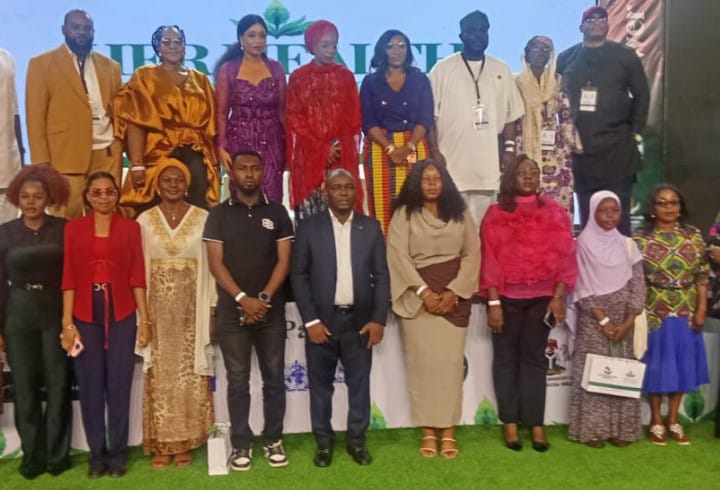
The experts spoke at the Her Health, Her Power Conference Africa 2026, organised by the Vickyheldan Empowerment Foundation and convened by its founder, Dr. Victory Njoku, at the Shehu Musa Yar’Adua Centre, Abuja, recently.
The conference, themed “Leading with Wellness for a Sustainable Africa,” brought together healthcare professionals, policymakers, women leaders, entrepreneurs, innovators, advocates and other stakeholders to deliberate on women’s health, maternal and reproductive health, mental wellness, preventive healthcare, healthcare financing, innovation and sustainable healthcare systems.
Speaking after the conference, Njoku announced plans by the Vickyheldan Empowerment Foundation to take its women’s health advocacy and intervention programmes to rural communities across Nigeria’s six geopolitical zones and other parts of Africa.
She said the initiative was designed to address persistent healthcare challenges confronting women, particularly those living in rural and underserved communities where access to healthcare information and services remains limited.
According to her, the Foundation would collaborate with Ministries of Health and relevant non-governmental organisations to move beyond conference discussions and deliver practical interventions at the grassroots.
“The greatest challenge is lack of collaboration,” Njoku said, stressing the need to bridge the gap between government policies and their implementation.
“We are looking at how to create the synergy between government policies as well as executing them too, because policy is one thing and execution is one thing as well,” she said.
She explained that the Foundation deliberately convened the conference to bring together key stakeholders and develop partnerships capable of transforming discussions on women’s health into concrete action.
“We’re not just having this conference just to come and sit down and have a conversation. We are in this conference to make the right action,” she added.
Njoku said the rural outreach would be undertaken in collaboration with government health authorities and civil society organisations to extend healthcare advocacy and interventions to communities across Nigeria.
She also urged Nigerians to become more intentional about their health, stressing that personal wellbeing was fundamental to national development.
“I’m imploring everyone to make intentional effort, be intentional about your health, because your health is your wealth, and you cannot do anything without being healthy,” she said.
In her welcome address, Njoku said the Her Health, Her Power Conference Africa was established to respond to challenges confronting women’s health through leadership, collaboration and action.
She said the vision was to build an Africa where every woman had equitable access to quality healthcare, could make informed health choices and benefit from healthcare systems that protect her dignity, wellbeing and productivity.
According to her, women’s health should not be viewed solely as a medical issue because it intersects with education, economic opportunity, gender equality, public policy and human rights.
She ,therefore, called on policymakers, first ladies, development partners, healthcare leaders, the private sector and civil society to place wellness at the centre of leadership and governance.
She urged stakeholders to strengthen cross-sector collaboration, prioritise preventive care and mental health, integrate women’s wellness into national development policies and promote data-driven, inclusive and culturally responsive healthcare interventions.
Also speaking at the conference, leading aesthetic physician and Partner/Chief Medical Director of Skinetics Skincare, Dr. Chuka Imo, urged women to stop treating wellness as a luxury, particularly as they take on increasing responsibilities in leadership, business, public service and other areas of national development.
Imo, who participated in a panel discussion at the conference, said women remained central to society and therefore needed to deliberately protect their physical and mental wellbeing.
He advised women leaders and professionals to make time to rest, relax and reset instead of sacrificing their health in pursuit of career success.
“It’s important that every time they get a chance, they don’t look at wellness as a luxury, because you need to create the vessel and protect the vessel that is going to push these policies or advocacies,” he said.
Imo said people often devoted considerable time to pursuing wealth, careers and other measures of success while neglecting the health required to enjoy those achievements.
“My message to participants is that we spend a lot of time chasing whatever reflection of success we have, but we should also remember that health is wealth,” he added.
Similarly, health technology innovator and entrepreneur, Ebozoje Deogratias Segun, called on the Federal Government to prioritise collaboration and strengthen the country’s primary healthcare system, particularly in rural communities.
Segun, Chief Executive Officer of GenLab Integrated Services Limited and Founder of Dokrah Healthcare Kids, said most Nigerians live in communities where affordable and accessible primary healthcare remains critical.
He argued that healthcare should not be determined by geography or income, urging government to work with private-sector innovators and healthcare founders to develop stronger and more sustainable systems.
“Nobody should suffer from the fact that he cannot afford healthcare. And everybody should be able to have access to quality healthcare,” he said.
Segun, who participated in panel sessions on leadership, innovation and mental wellness, said technology could complement government efforts through telemedicine, remote patient monitoring and other digital healthcare solutions.
He urged the Federal Government to focus on collaboration and strengthening primary healthcare.
“Collaboration. Build a stronger primary health care system because that is where the populace is. And collaborate with founders to build stronger systems,” he said.
He also encouraged Nigerians to embrace preventive healthcare and avoid burnout, stressing the importance of regular health checks and adequate rest.
“Empowering a woman is empowering a nation. And for a woman to be empowered, she needs to take care of her health,” Segun added.
Another healthcare expert, Dr. Diya Ololade, Executive Director/Deputy Director of Clinical Services at Atlantic Pediatric and Maternity Hospital, Lagos, called for stronger healthcare financing and immediate implementation of existing government health policies.
Ololade described women as a critical institution in society and stressed that the health of women, wives and mothers was directly linked to national development.
“I tell anybody who hears me that women are the most powerful institution in any society,” he said.
“A healthy woman, a healthy wife, a healthy mother is a healthy nation. That is very, very important to national development.”
The physician, who participated in the conference as a panellist, said healthcare financing remained one of the biggest challenges confronting the sector, urging government and the private sector to work together through sustainable public-private partnerships.
“Health is not cheap. If you check all over the world you will know that. But somebody is paying for it and that is important. Somebody needs to subsidize it. Public-private partnership needs to come together,” he said.
Ololade also called on the Federal Government to move beyond policy formulation to effective implementation, arguing that Nigeria already had several sound healthcare policies that required stronger execution.
“I’m not a politician but I would cry to the ears of the government as a whole — both the politicians, the people and the stakeholders. Policies are there in place, good policies are there in place, but we need to begin to implement and execute,” he said.
He urged stakeholders to ensure that competent personnel were placed in positions where they could effectively implement healthcare policies and strengthen the nation’s health system.
The experts’ positions reinforced the central message of the conference: that improving women’s health requires more than periodic conversations and policy declarations, but sustained financing, collaboration, preventive care, effective implementation and direct intervention at the grassroots.
The conference featured keynote presentations, policy dialogue, panel discussions, advocacy sessions, networking and empowerment activities, with participants examining practical strategies for improving women’s health and building sustainable healthcare systems across Africa.
The planned rural outreach by the Vickyheldan Empowerment Foundation is expected to build on the partnerships generated through the conference and take the campaign beyond Abuja to communities where healthcare needs remain significant.
The organisers said the ultimate objective was to transform conversations into commitments and commitments into measurable actions capable of improving the health, dignity and wellbeing of women and girls across Africa.