


By Iyoho Emmanuel
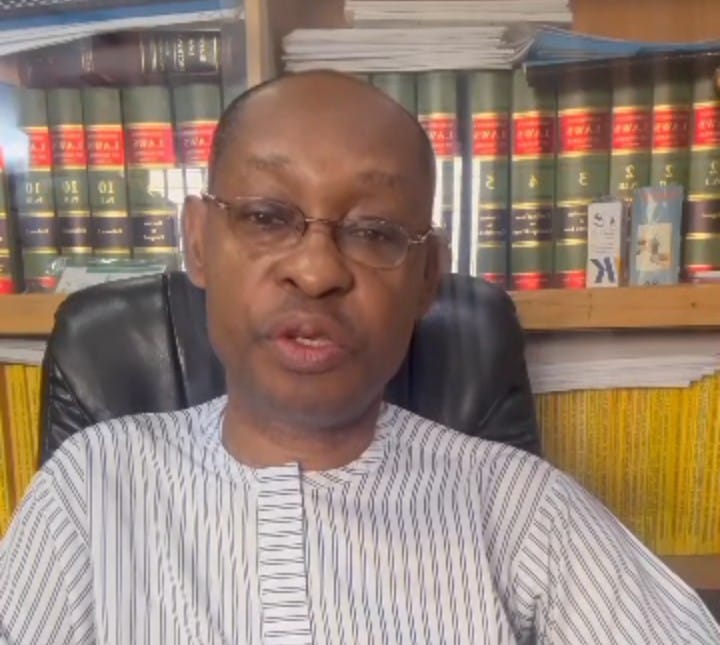
ABUJA — The Lead Director of the Centre for Social Justice (CSJ), Eze Onyekpere, has challenged President Bola Ahmed Tinubu and the National Assembly over the prolonged absence of a comprehensive federal audit legislation, describing the situation as a major gap in Nigeria’s public financial management system.
Onyekpere made the call while speaking on “Who Is Afraid Of A New Audit Law?”, a session under CSJ’s Public Finance Management Series in Abuja.
He argued that Nigeria currently lacks an extant federal audit legislation, noting that the Nigerian 56 Ordinance, which previously provided the legal framework for federal auditing, was superseded by provisions of the 1979 Constitution and was subsequently not reproduced in the Laws of the Federation of Nigeria, 1990 or 2004.
According to him, despite the absence of a modern federal audit law, both the executive and legislative arms of government at the federal level have continued to conduct public financial affairs as though the existing audit framework is adequate.
Onyekpere acknowledged the efforts of the National Assembly in passing the Federal Audit Service Bill, but expressed concern over President Tinubu’s failure to assent to the legislation.
He said the President, like previous administrations, had failed to give assent to the bill, urging the National Assembly to demand clarity on the reasons for the non-assent.
“The tradition is that if the President is denying assent to a bill, he writes back to the legislature, indicating that he cannot assent to the bill and giving the reasons as to why he is declining assent,” Onyekpere said.
He explained that communicating the reasons for withholding assent would give the legislature an opportunity to review the President’s objections and, where necessary, amend the legislation to address them.
According to him, where the National Assembly is convinced that the bill, as originally passed, is in the best interest of the country, the Constitution provides a mechanism through which the legislature can override presidential withholding of assent with the required majority
.
Onyekpere expressed concern that the Federal Audit Service Bill had passed through both chambers of the National Assembly and had been harmonised before being transmitted to the President, yet there had been no adequate public explanation of the reported failure to assent to it.
“But here we have a situation: the bill passed by the Senate, passed by the House of Representatives, harmonised, the President is denying assent, and nobody is saying anything. This is not the way to go,” he said.
He urged the National Assembly to revisit the matter and take what he described as the right decision in the interest of Nigerians, stressing that an effective and independent audit framework is essential to strengthening accountability and transparency in the management of public resources.
The CSJ Lead Director maintained that Nigeria’s public finance system could not be strengthened without an effective legal framework for auditing government revenues, expenditures and other public resources.
He therefore called on the National Assembly to act decisively on the Federal Audit Service Bill and ensure that the country has a modern and effective legal framework for public-sector auditing.