

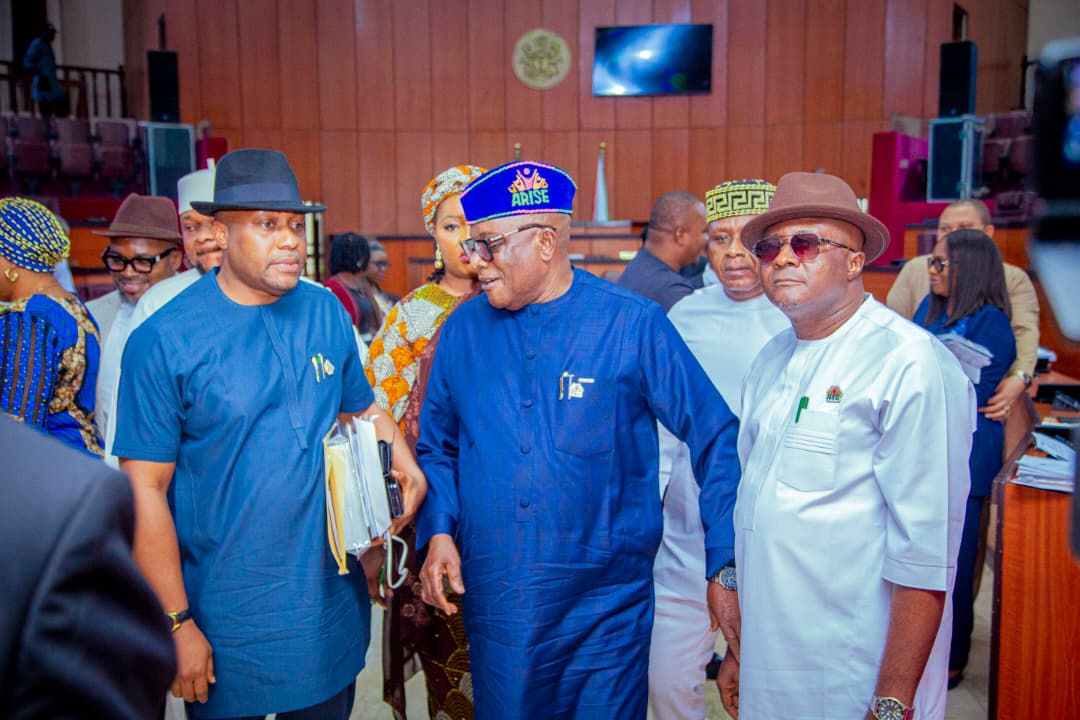

UYO-The Akwa Ibom State House of Assembly has called on underperforming local government areas to improve their approach to project planning, execution, and financial management to justify the confidence reposed in them through their statutory allocations.
The House also emphasised that greater priority should be given to projects that directly improve the welfare of the people, particularly in healthcare, education, rural roads, water supply, ICT, agriculture, and other essential public infrastructure.
These resolutions, adopted by the lawmakers during Tuesday’s plenary, are contained in the report of the House Committee on Local Government and Chieftaincy Affairs on its inspection tour of the 31 local government areas of Akwa Ibom , submitted by the Chairman, Rt. Hon. Mfon Idung.
In his report, Idung stated that his committee observed with dismay that some local councils, particularly Mkpat Enin, Abak, Nsit Ubium, Esit Eket, Ikono, and Udung Uko did not demonstrate a satisfactory level of project execution to commensurate with the funds received so far, noting inadequate infrastructural development and poor utilisation of resources received.
The committee, in its oversight duties, visited all 31 local government areas from June 26 to July 17, 2026, where lawmakers held meetings with local council officials, received briefings on developmental programmes, inspected projects funded by statutory allocations, and assessed the impact of these projects on the welfare of the people, among other activities.
Idung’s committee, further observed that statutory allocations are now paid directly to the councils following the implementation of local government autonomy by the federal government of Nigeria under President Bola Tinubu’s administration.

According to the committee, the state governor, Pastor Umo Eno, has not interfered with council funds, thereby enabling councils to exercise financial responsibility in accordance with the principles of autonomy.
It noted that majority of the local government councils have judiciously utilised their allocations in executing projects such as the construction and rehabilitation of rural roads, health centers, markets, legislative chambers and office complexes, and the drilling of boreholes, among other development projects.
Other findings include poorly maintained and generally unkempt council premises; incessant redeployment, posting, and rejection of management staff assigned to councils; and inadequacies in the provision of office accommodation and basic facilities.
The House further resolved that local councils should continue to uphold transparency, accountability, and prudent financial management, while ensuring the provision of essential working facilities for staff to improve productivity and service delivery.
The committee commended the performance of Itu, Urue Offong Oruko, Oron, Ikot Ekpene, Uyo, Ibeno, Okobo, Ibiono Ibom, Ini, Eket, Eastern Obolo, Essien Udim, Etim Ekpo, Ika, Ikot Abasi, Oruk Anam, Mbo, Uruan, Ukanafun, Ibesikpo Asutan, Nsit Ibom, Obot Akara, Onna, Etinan, and Nsit Atai local government areas for demonstrating a “commendable commitment to grassroots development.”
The recommendations, as read by the Speaker, Rt. Hon.( Elder ) Udeme Otong, were unanimously adopted by the House through a motion by the leader, Rt. Hon. Otobong Bob and seconded by his Deputy, Hon. Nsidibe Akata while the Clerk, Mrs. Nsikakabasi Orok, was directed to communicate the resolutions to the governor, the commissioner for local government and chieftaincy affairs, and chairman of the local government service commission respectively.