

UYO – An indigenous non -governmental organization under the aegis of Women’s Initiative For Self Actualization (WISA), has called on women to support their gender during elections as this will increase women participation in electoral process in the forthcoming 2027 general elections and 2028 local government elections in the state.
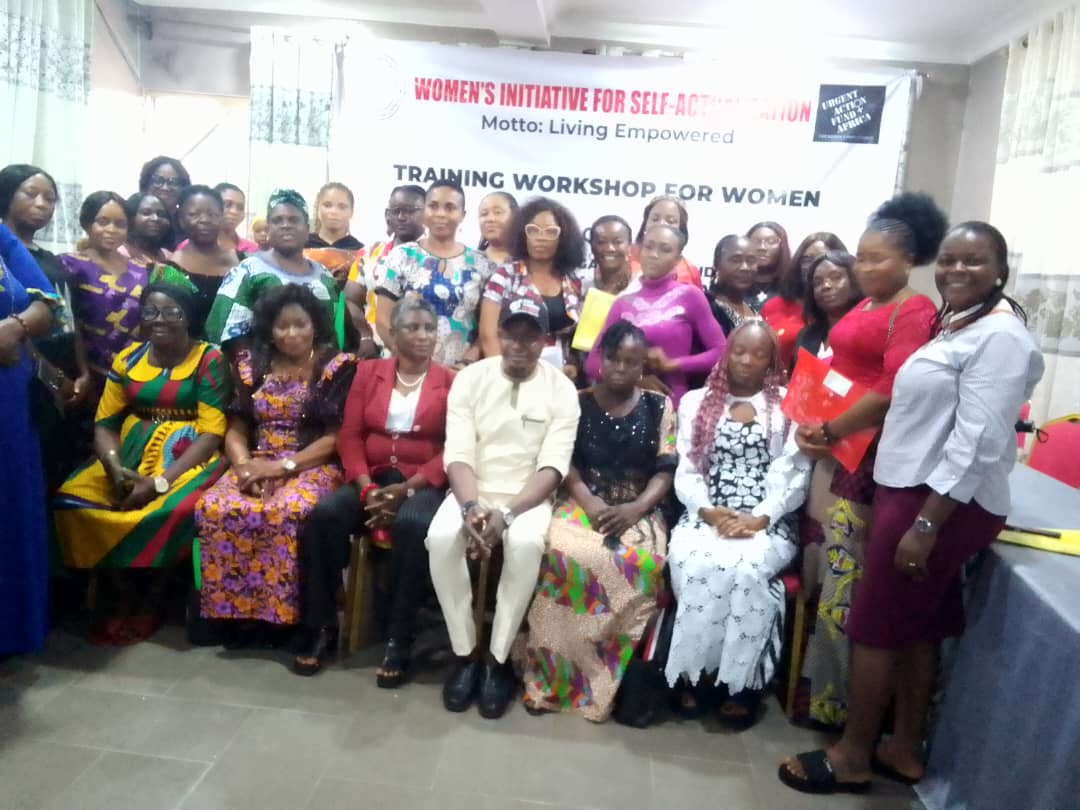
President and founder of WISA, Mrs Iniobong Frank, made the advocacy recently, during the 2-day training workshop for women on effective electoral engagement and as electoral observers in Akwa Ibom State, organized by WISA and funded by Urgent Action Fund (UAF) Africa, held in Uyo, recently.
Frank attributed the poor participation of women in electoral process and reduced number of women representatives in elected political offices in the country and state to disunity among the womenfolk, leading to lack of support for those who aspire for elected offices during elections.
She noted with dismay that despite the fact that women contribute the largest number of electorates during elections than men according to research, rather than rallying round fellow women who declare intents to contest, they pull down their gender and prefer to support the male gender.
Frank also frowned at situations where women are given only the position of women leaders in party leadership while men occupy sensitive and important positions, urging them to work towards changing the narrative by advocating for other positions in party leadership structure rather than being comfortable with the position of women leaders.
Highlighting the numerical strength of women as indicated in their attendances in churches, markets, communities and in political events through their association, she maintained that if women can make use of their large numbers to support their gender during election, the issue of poor participation of women in electoral processes and reduced representations in elected offices would be corrected.
Frank noted that women in their various communities engage in weekly and monthly contributions among themselves, opining that with unity, women can support their gender who aspires with funds to at least purchase nomination forms, stressed the need for women to unite to fight their courses by contributing to sponsor a female candidate for election.
She observed that politics without women was boring as they add colour to everything during political events, expressing displeasure that even with the important role played by women, they are denied the opportunity to participate freely in electoral processes.
Frank recalled that during the 2023 local government election in the state, 98 per cent of councillors were women, but after that, women relaxed in their participation in elections and became reluctant with the expectations and assumptions that men would bring positions to them.
According to her, it was the place of women to fight their cause, as positions will not be brought to them at their comfort zones, lauding Governor Umo Eno, for his inclusive leadership style where a woman, Senator Akon Eyakenyi, serves as his deputy.
The president and founder of WISA, thanked participants for joining the civic space to fight the cause of women in electoral process in Akwa Ibom and Nigeria at large.
Giving an overview of the WIFA project titled, “Influencing political party primaries and 2027 general elections to expand women’s candidacy in Akwa Ibom State(2026-2027 election cycle)”, the project officer of WISA, Mr Joshua Nya, said the project was aimed at strengthening women capacity to be gainfully involved in electoral process, targeting not just the 2027 election but the 2028 Local Governments election.
Nya, explained that prior to the training, WISA had held advocacy meetings across local government areas with political parties and women associations at the community level with participants selected from catchment areas of interest.
He observed that in political candidacy, women have traditionally had low level of participation since the return of democracy, adding that despite INEC’s threat of sanction, it has been projected that the 2027 election could deliver worse representation of women than the 2023 election.
According to him, WISA seeks to address structural barriers that limit women entry into political leadership by focusing on political party gate-keeping systems and candidate emergence processes ahead of the party primaries that would be rounded up by September 2026 and the 2027 general election.
Highlighting the vision and mission of WISA, Nya made known that the NGO had engaged in various projects that target women, girls, and other categories of individuals on different project focus including it partnership with Women United for Economic Empowerment(WUEE), for a civic engagement that targeted women in the project titled, “Strengthening Citizens Engagement in Electoral Process(SCEEP) Project).
Papers were presented on “Women articipation in the electoral space: Overview, structural barriers, contemporary reforms, benefits of women’s political participation and recommendations, presented by Mr Joshua Nya; as well as “Tech-driven data integrity: Women election observers and “Beyond the ballot: Party assessment frameworks”, both presented by Mr Mfon Gabriel, during which he highlighted the dos and don’ts as regards election observing, while also atributing the poor representation of women in elected political offices in Nigeria to fear by women and their hatred towards fellow women, urging them to carry the face of a woman and the heart of a man with conscience.
According to him, when women are fully representated in politics, their decision will matter but if there is no inclusion, their decision will not matter.
At the event, participants who were drawn from select communities in Uruan, Uyo, Ukanafun, Nsit Ibom and Nsit Atai local government areas, listed the challenges that hindered their participation in electoral process as, lack of support by gender, lack of finance, blackmail by the male folk and gender, high cost of nomination forms, betrayal by political leaders, etc, and recommended the need for serious reorrientation of party leadership at all levels in the state, funding of women political ambition by international organizations and funders, amongst others.